
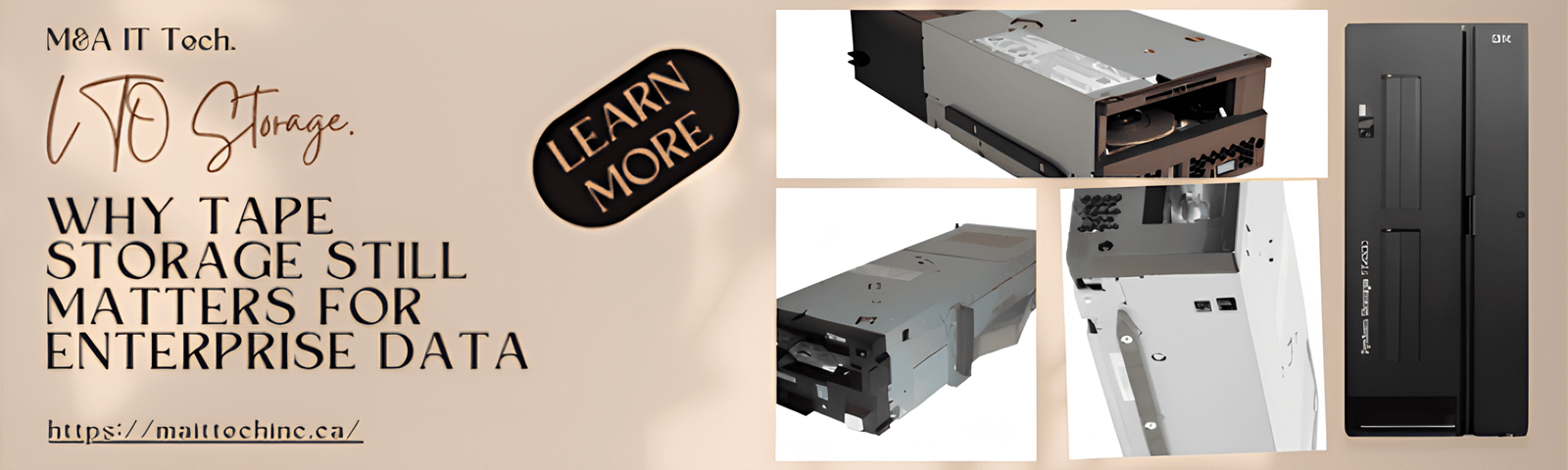
Why Tape Storage Still Matters for Enterprise Data

In an era dominated by cloud computing and disk-based storage, many IT professionals question: is tape storage still relevant? Surprisingly, tape storage relevance continues to grow, particularly for enterprises managing long-term data archiving, cybersecurity, and cost-effective storage solutions.

Even as cloud solutions evolve, enterprise tape storage solutions remain a critical component of digital archiving strategies and disaster recovery plans. This article explores why tape storage for enterprise data is far from obsolete and why modern organizations still rely on it.

1. The Enduring Role of Tape in Enterprise Data Protection

Despite perceptions that tape is “old technology,” the numbers tell a different story. According to IDC, over 12 exabytes of data are stored on tape worldwide, and the demand is projected to grow as organizations face data explosion.

Key reasons for tape’s enduring relevance include:

  1. Cost-effective archival storage: Tape offers a lower total cost of ownership (TCO) compared to disk or cloud for cold data storage.
  2. Long-term durability: LTO tape media can reliably store data for up to 30 years under proper conditions.
  3. Air-gap protection: Tape serves as a ransomware-resilient backup, disconnected from online systems, which is crucial in cybersecurity strategies.

“For enterprises with large volumes of archival data, tape remains the most reliable and cost-efficient medium,” says Dr. Tom Coughlin, storage analyst.

2. Tape Storage vs Cloud: Key Considerations

When evaluating tape storage vs cloud, enterprises must consider multiple factors: cost, performance, security, and scalability. Below is a comparison table highlighting these differences:

Feature Tape Storage Cloud Storage
Cost per TB $10–$30 $25–$50 (ongoing)
Data Longevity 20–30 years Variable; depends on subscription
Offline Protection Yes (air-gap) No
Recovery Speed Moderate Fast for active data
Scalability Linear; add cartridges Virtually unlimited
Cybersecurity High (offline air-gap) Medium; cloud is online
Environmental Impact Low energy consumption Higher; constant power for servers
Best Use Cold data archiving, compliance Hot/warm data, collaborative workloads

From this table, it’s clear that tape storage for long-term archiving offers advantages in cost, durability, and security—especially when paired with hybrid cloud and tape integration strategies.

3. Benefits of Tape Storage for Enterprises

3.1 Cost-Effective Long-Term Archiving

Enterprises can reduce storage costs significantly by migrating cold data to tape. For example, an organization storing 1 PB of inactive data can save up to 80% compared to cloud storage costs over five years (Source).

3.2 Enhanced Cybersecurity

Tape provides an air-gap backup, physically isolated from networks. This offline approach protects critical enterprise data from ransomware and other cyberattacks.

3.3 Compliance and Regulatory Support

Industries like finance, healthcare, and energy must comply with long-term retention policies. LTO tapes, combined with data lifecycle management storage policies, simplify regulatory compliance.

3.4 Longevity and Reliability

Modern LTO tape storage technology ensures decades-long media durability, making it ideal for enterprise disaster recovery tape solutions.

4. Tape Libraries and Automation

Tape library systems provide automated handling of tape cartridges, enabling scalable offline backup solutions and efficient data lifecycle management. Key features include:

  • Robotic tape loading/unloading
  • Automated error checking and verification
  • Integration with enterprise data protection tape systems

“Tape libraries allow enterprises to manage petabytes of data without manual intervention, making long-term retention practical,” says IDC Storage Insights.

5. Hybrid Cloud and Tape Integration

A growing trend is hybrid cloud and tape integration, combining the agility of cloud storage with the cost-effectiveness and security of tape. Benefits include:

  • Tiered storage: Active data resides in the cloud, while cold data moves to tape.
  • Disaster recovery optimization: Critical backups are retained offline.
  • Regulatory compliance: Tape archives ensure long-term retention mandates are met.

This hybrid approach allows organizations to leverage digital archiving strategies without sacrificing enterprise data protection.

6. Tape Storage Best Practices

For enterprises adopting tape, best practices include:

  1. Regular media testing and verification
  2. Proper storage environment (cool, dry, stable humidity)
  3. Documented data retention policies
  4. Secure chain of custody for sensitive data
  5. Integration with backup software for automated workflows


Implementing these practices enhances reliability and ensures long-term data retention methods are adhered to.

7. Real-World Use Cases

7.1 Large Enterprises

Companies like NASA and Netflix still use tape storage for long-term archival, storing petabytes of historical data offline to reduce costs.

7.2 Cybersecurity-Driven Organizations

Banks and healthcare providers rely on tape as air-gap backup to mitigate ransomware threats

7.3 Disaster Recovery

Enterprise disaster recovery tape systems provide offline redundancy, essential in multi-site operations for business continuity planning.

8. Future of Tape Storage

The future of tape storage is promising. Developments include:

  • LTO-10 and beyond with capacities up to 36 TB per cartridge
  • Enhanced encryption standards for cybersecurity
  • Better integration with cloud-based management tools


Tape is no longer just a backup medium—it is a strategic enterprise storage solution.

9. Tape Storage vs Disk: A Cost and Efficiency Perspective

Another key comparison is tape vs disk for backup. Consider the following:

Metric Tape Disk
Cost/TB Low High
Power Usage Minimal (offline) Continuous
Ransomware Risk Low (air-gap) High
Data Retention Decades Typically <10 years
Maintenance Low Moderate

Tape media durability and lifespan consistently outperforms disk for long-term archival, making it a viable cold data storage option.

10. Implementing Tape Storage Today

To implement enterprise tape storage solutions, consider:

  1. Assessing data tiering needs
  2. Choosing the right LTO tape generation
  3. Deploying automated tape libraries
  4. Integrating backup software for seamless workflows
  5. Scheduling regular audits and data verification


This structured approach ensures cost-effective archival storage and ransomware-resilient backup.

11. Conclusion

While cloud storage dominates headlines, tape storage for enterprise data remains indispensable. Enterprises benefit from:

  • Cost-effective long-term storage
  • Air-gap protection and cybersecurity resilience
  • Regulatory compliance support
  • Durability and reliability for decades of retention


Incorporating tape library systems and hybrid cloud integration enables organizations to optimize both active and cold data storage, ensuring that enterprise data protection tape systems remain relevant well into the future.

For businesses exploring offline backup solutions and digital archiving strategies, investing in tape storage is no longer optional—it’s a strategic imperative.

“Tape is not dead. It is evolving into a cornerstone of enterprise data protection,” says Coughlin Associates.

Share:

More Posts

Send Us A Message